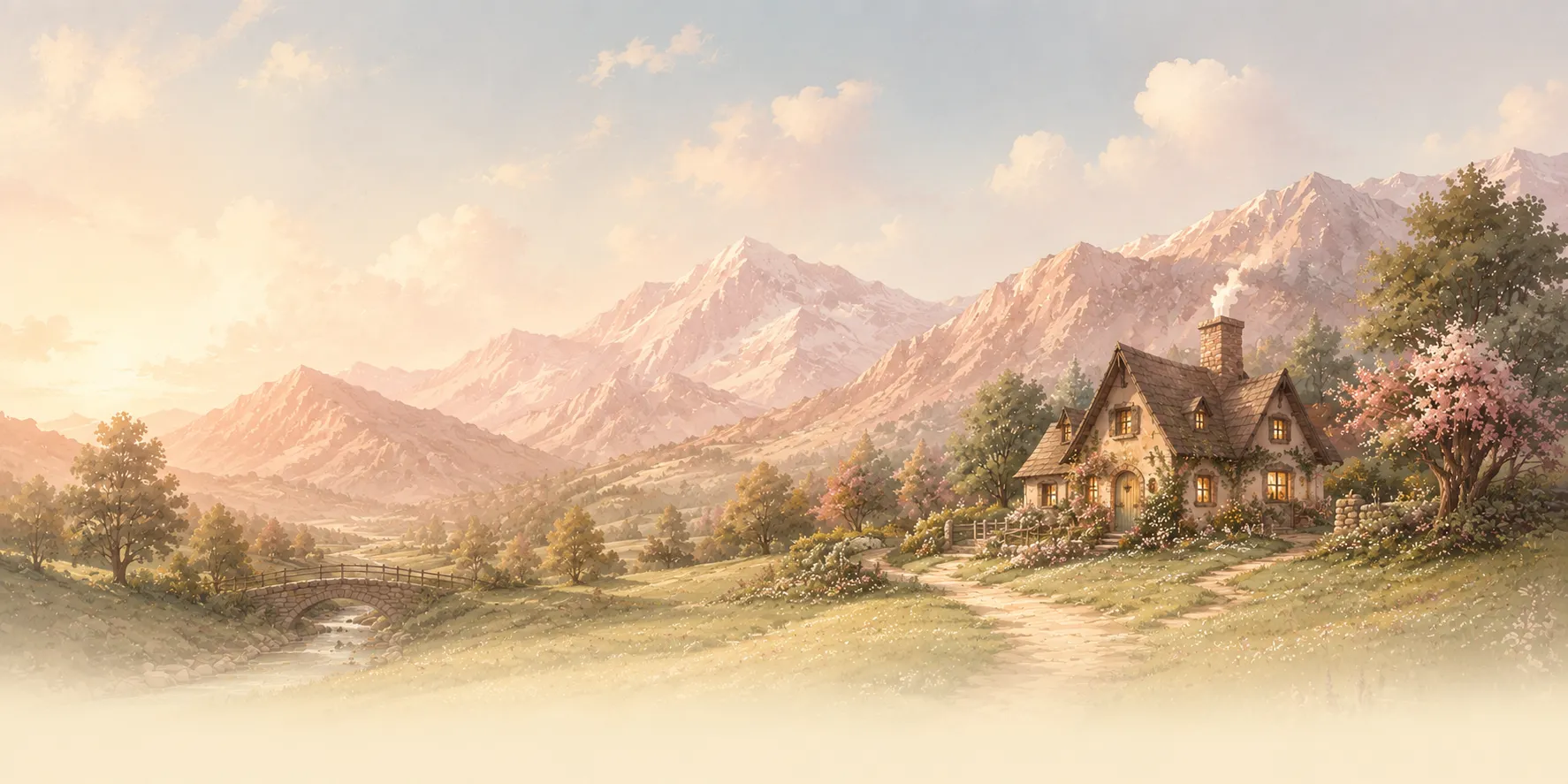
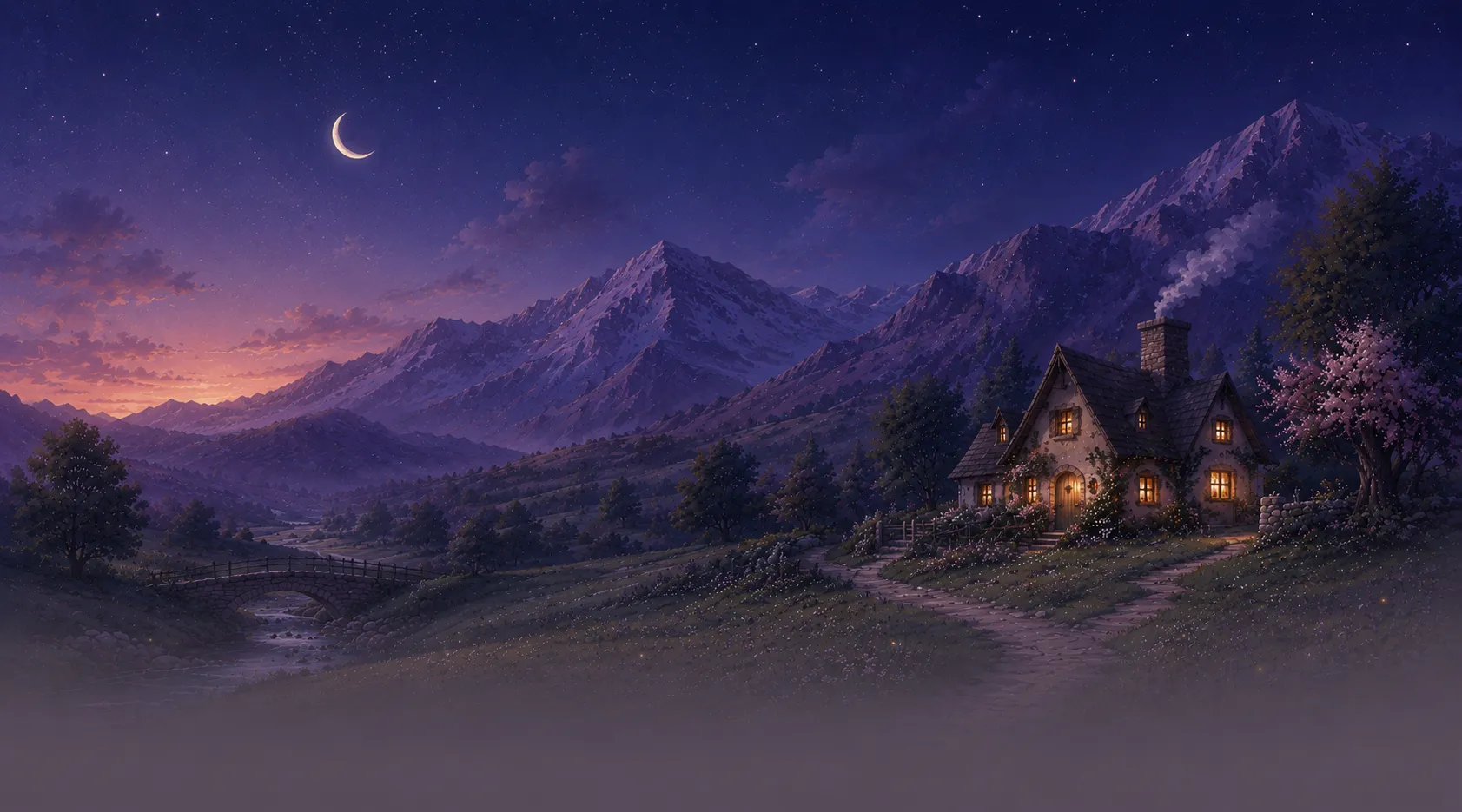
The Old Road
The plums were candied, which was how everyone knew.
Candied plums came to the high table for one person only. The king took no sweets. The chancellor abstained from everything on principle. The plums were the princess’s dish, and had been since she was small. The whole household knew it.
Merta tasted the princess’s dishes. She had done it for eleven years. She used to tell the kitchen girls it was the safest work in the palace: who would trouble a princess who signed nothing and ruled nothing?
At supper she took one plum, set down the spoon, and said, in a small puzzled voice, “Oh.”
No one at that end of the hall misunderstood.
It was not quick. That was the part Quinn did not let herself remember in daylight, and could not stop remembering at night. The physicians said it was wolfsbane and something else, something slower. They said Merta would have felt little.
They were lying about the second part. Quinn had held her hand.
She was nineteen. She had held the hands of the dying before: her mother’s, three winters past, and her father’s often now, though he did not always know whose hands his own were in. But illness comes on its own.
The plums had been sent.
The inquiry lasted nine days. Chancellor Vantry conducted it, and it found nothing.
A kitchen porter was dismissed. A merchant’s license was revoked. The chancellor stood before the council and spoke of vigilance, and while he spoke he looked at Quinn with his usual expression: patient, measuring. The look of a man checking on something he had planted.
Her father coughed in his great chair and asked whether Merta might bring his cordial.
No one corrected him. That was the state of the kingdom.
Quinn sat through it with her hands folded and her face calm. A princess learns her face early. Behind it, she was counting.
Who controlled the guard rotations? Vantry. Who had appointed the new cellarer, the new taster, the new captain of the postern watch? Vantry. And if the king died with the princess unmarried, or if the princess died first, the regency fell to one of three men. Two were old and wanted nothing.
The third was patient.
She could prove none of it. That was the trap. Accuse him with nothing, and she handed him the kingdom: a hysterical girl, a failing king, a regency of necessity. Wait, and she went on eating and drinking and sleeping in a house where the kitchen answered to him, until some dish came for her with no Merta standing in front of it.
Her mother’s people were in the north, beyond the mountains. Her aunt kept the March: old blood, hard country, five hundred lances, and no love for southern chancellors. Behind five hundred lances, accusations could be made. Regencies could be contested.
It was not running, she told herself on the fourth sleepless night, studying her mother’s old maps by a shielded candle. It was logistics.
It was also running. She was honest enough to know that, and frightened enough not to care.
She left through the laundry court before dawn on a market day, in wool and patched linen. Her hair was cut to her jaw and sold, to make the disguise true. She carried a servant’s satchel: bread, hard cheese, a waterskin, flint, her mother’s smallest ring sewn into her hem, and a map older than her grandmother.
Getting out was easy. The palace watched for people getting in.
The roads were the problem. The great north road ran through the new pass. The new pass had a toll gate, the toll gate had a garrison, and by the second day the garrison had a description. She learned this at a carters’ tavern in the foothills, eating porridge with her hood down (a hood up is a shout) while two riders in chancellery gray questioned the landlord about a young woman traveling alone. Well-spoken. Brown-haired.
The landlord, who had watched Quinn stack her own bowl and haggle a copper off the porridge, said he’d seen no one of the kind.
She left through the yard, between wagons. Behind the stables she stood in the cold for a while, shaking. Then she took out the old map.
The old road. Over the shoulder of the mountain, through Sweetwater Ford. Her grandmother’s map marked it in faded ink. The newer survey marked it too, in the flat words of the royal engineers: road abandoned. bridge out at the ford. inn at Sweetwater: ruin.
A dead road. No toll, no garrison, no eyes. Also no food, no roofs, and a pass to cross before the snow shut it.
She looked at the mountains for a long time.
“Ruin will do,” she said, and started walking.
The old road did not want her.
It had been a good road once. She could feel that under the ruts and the grass: the old width of it, the flat stones where wagons had watered. But two hundred years had had their way. Alder grew in the roadbed. Slides had taken it in three places, and she crossed them on all fours, above drops she chose not to look at. Her city boots split at the seams on the second day. She bound them with strips of her hem and kept climbing.
She ate the last of the cheese on the third day.
That night she could not feel her smallest toes. She lay wrapped in her cloak in the lee of a fallen wall, listening to wolves somewhere below (far below, she told herself; sound carries in the mountains) and counted what she had left. Two days to the pass, maybe three in snow. Food: bread ends. Her toes: an open question.
No riders would follow her up here. No one would follow her up here. That had been the whole plan: take the road with nothing on it.
She had not understood, in a palace, with maps, what nothing meant.
On the fourth day it snowed.
Small, dry snow. It hissed in the alders and made the broken road slick. The cold worked on her fingers and her face all day while she climbed. By afternoon she was falling every hundred paces. By dusk she had stopped being afraid of the wolves, and she knew that was a bad sign. The cold makes you stupid before it makes you dead. A huntsman had told her that once, when she was small, by a fire, in another life.
The light failed. The snow kept on.
Quinn came around a long dark bend, past a waist-high boundary stone capped with snow. She put her bare hand on it as she passed, to steady herself. She would think about that later: how the road seemed kinder after the stone. Kinder underfoot. Perhaps her feet had just gone numb.
Then she stopped dead in the middle of the old road, swaying.
There was a light.
Warm light, gold, steady, low against the black bulk of the mountain. Under it, half-seen through the snow: a roofline. A chimney, with smoke rising soft against the last gray of the sky. And a faint, rhythmic creak. A hanging sign, moving in the wind.
Her first thought was absurd: the survey says ruin.
Her second thought was of her nurse’s fireside tales. Mountain lights. Lamps that walked. Houses that were not there in the morning. The tables of the patient dead. Travelers who ate at such tables did not come home, or came home wrong, or came home a hundred years late to find their names on stones.
She stood in the snow, nineteen years old, starving, three days from the nearest soul who wished her well, with dead toes behind her and a pass ahead that would kill her in a night, and weighed witchcraft against winter.
The lamp burned gold. Snow crossed it and did not dim it. And on the wind now, unmistakable, came the smell of bread.
“If you are a tale,” said Princess Quinn to the light, through cracked lips, “be a kind one.”
She walked up the last of the road, and knocked at the door.
Inside, in the warm, the innkeeper of the Sweetwater raised her head.
She was at the hearth, banking the fire for the night. For a moment she did not move at all. Then the knock came again: small, exhausted, half-swallowed by the wind. The knock of someone at the very end of themselves.
Two hundred years, that knock had been coming.
Lydia set the iron down without a sound. She crossed her swept floor, past her scrubbed table, under her fourteen shining windows: all of it kept, all of it ready, for exactly this and nothing else. At the door she paused one breath. She smoothed her apron and touched her hair, the old habit, the same small vanity she had carried to another door, in another world, a month and a lifetime ago.
The first guest in two hundred years.
She opened the door.
end of chapter 7